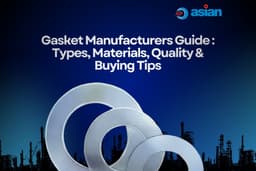
Industrial gaskets play an essential role in preventing leakage, maintaining pressure, and ensuring safe operations across manufacturing plants, oil and gas facilities, petrochemical industries, power generation units, and other industrial applications. Although gaskets are relatively small components, choosing the wrong type or material can result in equipment damage, production downtime, and costly maintenance.
For industrial buyers, selecting the right gasket involves more than comparing prices. Understanding gasket types, material properties, manufacturing quality, operating conditions, and dimensional requirements is essential before placing an order.
Whether you are sourcing standard flange gaskets or customised industrial sealing solutions, working with experienced gasket manufacturers can help you identify products that meet your application’s requirements.
Asian Sealing Products manufactures and supplies industrial sealing solutions for domestic and international requirements, including customers and projects across Qatar, Kuwait, Saudi Arabia, and the United Arab Emirates (UAE). This guide explains the major gasket types, materials, quality considerations, and practical buying tips to help procurement professionals make informed decisions.
What Are Industrial Gaskets and Why Are They Important?
An industrial gasket is a sealing component installed between two mating surfaces, such as pipe flanges, equipment connections, or machinery components. Its primary purpose is to fill surface irregularities and create a reliable seal when the joint is properly assembled and compressed.
Gaskets are widely used in industries where liquids, gases, steam, chemicals, and other process media must remain contained.
The right gasket helps businesses:
- Prevent leakage from pipelines and industrial equipment.
- Maintain sealing performance under specified pressure and temperature conditions.
- Reduce equipment maintenance and unexpected downtime.
- Improve operational safety and equipment reliability.
- Support efficient operations across industrial facilities.
However, gasket performance depends on selecting the correct design, material, dimensions, and installation method for the application.
Different Types of Industrial Gaskets Used in Manufacturing
Industrial gaskets are available in different constructions to suit various operating environments. Understanding their applications helps buyers select the right sealing solution.
A. Spiral Wound Gaskets
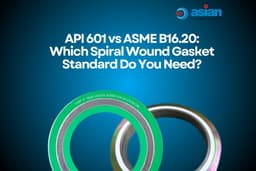
A spiral wound gasket is manufactured by winding a combination of metallic strips and non-metallic filler materials in a spiral pattern. This construction provides flexibility and recovery characteristics that make it suitable for many demanding flange applications.
Common materials include stainless steel 304, stainless steel 316, flexible graphite, and PTFE, depending on the required configuration.
Typical applications:
- Oil and gas pipelines.
- Refineries and petrochemical plants.
- Steam and power generation systems.
- Chemical processing equipment.
Buyers should consider winding material, filler material, pressure class, flange dimensions, and the requirement for inner or outer rings.
B. Ring Joint Gaskets (RTJ)
Ring Joint Gaskets are metallic sealing components designed for specially machined flange grooves. They are commonly used in high-pressure applications where metal-to-metal sealing is required.
Common configurations include oval and octagonal ring profiles, along with other specified designs.
Typical applications:
- Oil and gas production facilities.
- High-pressure pipelines.
- Wellhead equipment.
- Petrochemical processing installations.
When selecting a ring gasket, buyers should confirm the ring number, profile, material grade, flange groove dimensions, and applicable standard.
C. Metal Gaskets
Metal gaskets are manufactured from metallic materials to suit applications requiring specific mechanical and sealing properties. Depending on their construction, they can be designed for demanding pressure and temperature conditions.
Common materials include stainless steel, carbon steel, Inconel, and other specified alloys.
Typical applications:
- Industrial machinery.
- Heat exchangers.
- Pressure vessels.
- High-temperature processing equipment.
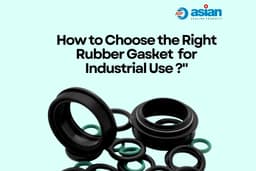
D. Rubber Gaskets
Rubber gaskets are flexible sealing components manufactured using different elastomers. Their performance depends on the rubber compound and its compatibility with the operating environment.
Common materials include EPDM, NBR, neoprene, silicone, and FKM.
Typical applications:
- Water treatment facilities.
- Pumps and industrial equipment.
- Chemical processing systems.
- General piping connections.
The correct rubber compound should be selected according to fluid compatibility, temperature, pressure, and environmental exposure.
E. PTFE and CNAF Gaskets
PTFE gaskets are valued for their chemical resistance and are used in applications where compatibility with aggressive process media is important.
CNAF (Compressed Non-Asbestos Fibre) gaskets are manufactured using fibre-based sealing materials and suitable binders. They are commonly used in general industrial flange connections.
Both types are available in different dimensions and thicknesses to suit specific applications.
F. Metal Jacketed and Kammprofile Gaskets
Metal jacketed gaskets combine a metallic outer covering with a compressible filler, making them suitable for selected heat exchanger and industrial equipment applications.
Kammprofile gaskets feature a grooved metallic core with a facing material such as graphite or PTFE. Their construction combines a metallic support structure with a conformable sealing surface.
The correct option depends on flange design, operating conditions, and equipment specifications.
Common Materials Used in Industrial Gasket Manufacturing
Material selection directly influences gasket performance, durability, and chemical compatibility. Professional manufacturers consider the application before recommending a particular material.
| Gasket material | Common applications |
|---|---|
| Stainless Steel 304/316 | Metallic and spiral wound gasket construction |
| Flexible Graphite | Selected high-temperature sealing applications |
| PTFE | Chemical-resistant sealing applications |
| CNAF | General industrial flange connections |
| EPDM | Water and suitable chemical applications |
| NBR | Oil and fuel-related applications |
| FKM (Viton) | Selected chemical, oil, and elevated-temperature applications |
| Inconel and Monel | Specialised applications requiring specific alloy properties |
The correct material should never be selected based on temperature alone. Chemical compatibility, operating pressure, flange condition, bolt loading, and service conditions must also be considered.
For example, an EPDM gasket may be suitable for a particular water application, whereas an NBR gasket may be more appropriate for certain oil-related services. The final choice should always be confirmed against the material manufacturer’s compatibility data and the equipment specification
How to Evaluate Gasket Manufacturing Quality ?
Quality is one of the most important considerations when sourcing industrial sealing products. A gasket with incorrect dimensions, unsuitable materials, or poor construction can affect the entire flange connection.
Before purchasing, industrial buyers should evaluate the following factors.
Dimensional accuracy: Check inner diameter, outer diameter, thickness, profile, and flange compatibility against the approved drawing or applicable standard.
Material verification: Confirm that the supplied material matches the purchase specification. Request material test certificates or other traceability documents when required.
Manufacturing consistency: Examine the winding, filler, surface finish, edge condition, and overall construction according to the gasket type.
Applicable standards: Check whether the product is manufactured to the relevant specifications. ASME B16.20 covers specified metallic pipe-flange gaskets, while ASME B16.21 covers non-metallic flat gaskets. Other standards may apply depending on the product and application.
Inspection and documentation: Ask about dimensional inspection reports, material certificates, inspection records, and any additional testing required by the project.
A reliable manufacturing process should provide consistent product quality and documentation appropriate to the buyer’s technical requirements.
What Should Buyers Check Before Ordering Industrial Gaskets?
Whether you are purchasing for a new industrial project or replacing existing sealing components, providing accurate technical information helps avoid ordering errors.
Use this checklist before requesting a quotation:
- Gasket type: Specify whether you require spiral wound, RTJ, metal, rubber, PTFE, CNAF, or another gasket construction.
- Dimensions: Provide the inner diameter, outer diameter, thickness, and relevant flange drawing.
- Operating conditions: Mention the working temperature, pressure, and process medium.
- Material requirements: Specify the required metal grade, filler, elastomer, or non-metallic material.
- Applicable standards: Identify the required ASME, API, EN, DIN, or other project specifications.
- Quantity: Confirm the required quantity and whether repeat orders are expected.
- Delivery requirements: Specify the destination, preferred delivery schedule, packaging, and required documentation.
Providing these details allows manufacturers to assess the requirement more accurately and recommend a suitable product configuration.
Industrial Gasket Manufacturing and Supply for Gulf and Middle East Markets
Industrial projects across the Gulf and Middle East require dependable sealing products, accurate technical specifications, and organised international procurement.
Countries such as Qatar, Kuwait, Saudi Arabia, and the United Arab Emirates have industrial requirements across oil and gas, petrochemical processing, power generation, water treatment, and infrastructure projects.
Asian Sealing Products manufactures and supplies industrial gaskets for international buyer requirements, with consideration for product specifications, order quantities, and destination-specific delivery arrangements.
For buyers sourcing products for these markets, it is important to confirm:
- Product dimensions and material specifications.
- Applicable manufacturing standards and inspection requirements.
- Product availability and manufacturing lead times.
- Export packaging and shipment arrangements.
- Commercial invoices and applicable shipping documentation.
- Destination-specific import and customs requirements.
For time-sensitive projects, buyers should also clarify who is responsible for freight coordination, customs documentation, and shipment updates.
These checks help procurement teams manage international orders more efficiently and reduce avoidable delivery complications.
Why Choose an Experienced Industrial Gasket Manufacturer?
Selecting an experienced manufacturer can make a difference when sourcing sealing products for industrial applications. Manufacturers with suitable technical capabilities can support product selection, dimensional requirements, material options, and custom manufacturing requirements.
When comparing manufacturing partners, consider their product range, manufacturing capabilities, quality-control procedures, technical support, documentation, and delivery commitments.
Asian Sealing Products provides industrial sealing solutions across different gasket categories, helping buyers evaluate products for their specific equipment and project requirements.
Whether you require a spiral wound gasket, ring joint gasket, metal gasket, rubber gasket, or customised sealing component, share your technical drawing and operating details to help identify a suitable solution.
Conclusion
Choosing the right industrial gasket requires a clear understanding of product types, material properties, operating conditions, manufacturing quality, and application requirements. From spiral wound and ring joint gaskets to metal, rubber, PTFE, and CNAF products, each construction serves different sealing requirements.
Before placing an order, compare manufacturers based on technical capabilities, dimensional accuracy, material verification, quality documentation, and delivery arrangements rather than price alone.
Asian Sealing Products supports industrial gasket manufacturing and supply requirements for buyers in India and international markets, including Qatar, Kuwait, Saudi Arabia, and the UAE.
Looking for industrial gaskets for your next project? Contact Asian Sealing Products with your product specifications, technical drawings, or enquiry requirements to discuss a suitable sealing solution.