

Choosing the right gasket manufacturers is an important decision for industries where sealing reliability, safety and equipment performance directly affect production. A gasket may be a relatively small component, but an incorrect material, poor dimensional accuracy or unsuitable design can result in leakage, equipment damage, production downtime and expensive maintenance.
For buyers in industries such as oil and gas, petrochemical, chemical processing, power generation, marine, water treatment and heavy engineering, the manufacturer should be evaluated on much more than price.
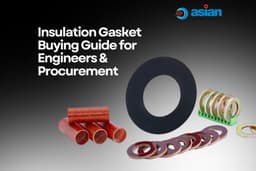
Whether you are sourcing spiral wound gaskets, ring type joint (RTJ) gaskets, insulation gasket, metal gaskets, PTFE gaskets, rubber gaskets, Kammprofile gaskets, metal jacketed gaskets or custom-engineered sealing solutions, there are several important factors to check before placing an order.
If you are sourcing from India for projects in Dubai, Abu Dhabi, Saudi Arabia, Qatar, Kuwait or other GCC markets, these checks become even more important because documentation, international standards, material traceability and reliable delivery can directly affect project schedules.
Key Factors To Consider Before Selecting a Gasket Manufacturer
1. Check the Manufacturer’s Industry Experience
The first thing to evaluate is the manufacturer’s experience in producing industrial sealing products.
An experienced manufacturer should understand the requirements of different industries and applications rather than simply supplying standard gasket sizes.
For example, gasket requirements for a refinery may be very different from those used in water treatment or general engineering.
Look for manufacturers with experience in applications involving:
- Oil and gas
- Refineries and petrochemical plants
- Chemical processing
- Power generation
- Heat exchangers
- Pressure vessels
- Marine applications
- Water treatment
- Heavy engineering
- Industrial pipelines
A manufacturer with application-specific knowledge can help you select the appropriate gasket type, material, thickness and construction based on your operating conditions.
2. Verify International Manufacturing Standards
One of the most important questions to ask is:
“To which standards are the gaskets manufactured?”
Reputable industrial gasket manufacturers should be able to clearly identify the applicable standards for their products.
Depending on the gasket type and application, commonly referenced standards include:
- ASME B16.20 – Metallic gaskets
- ASME B16.21 – Non-metallic flat gaskets
- ASME B16.5 – Pipe flanges and flanged fittings
- ASME B16.47 – Large-diameter flanges
- API standards for applicable oil & gas applications
- EN standards
- DIN standards
- BS standards
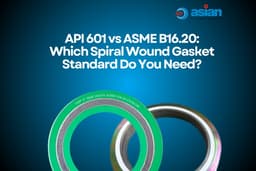
For example, Asian Sealing Products manufactures spiral wound gaskets in accordance with ASME B16.20 and offers configurations suitable for ASME B16.5 and ASME B16.47 flange applications.
Standards compliance helps buyers maintain dimensional compatibility and consistent manufacturing requirements across different projects and locations.
3. Evaluate the Range of Gasket Materials
Material selection is one of the most critical factors affecting gasket performance.
A professional gasket manufacturer should offer multiple material options rather than recommending the same gasket material for every application.
Depending on the service conditions, gasket materials may include:
- Graphite
- PTFE
- CNAF/CAF
- EPDM
- NBR/Nitrile
- FKM/Viton
- Silicone
- Neoprene
- Stainless steel
- Carbon steel
- Inconel
- Other specialty alloys
The correct material depends on factors such as temperature, pressure, chemical compatibility, process media, flange type and operating environment.
For example, graphite-filled spiral wound gaskets are commonly considered for high-temperature applications, while PTFE is useful where chemical resistance is particularly important.
A good manufacturer should therefore understand your application before recommending the material.
4. Check Whether They Manufacture Different Types of Gaskets
A manufacturer with a broad product portfolio can simplify procurement and help maintain consistency across projects.
Depending on your requirements, the manufacturer may offer:
Metallic Gaskets
- Ring Type Joint Gaskets
- Solid Metal Gaskets
- Metal O-Rings
- Corrugated Metal Gaskets
Semi-Metallic Gaskets
- Spiral Wound Gaskets
- Kammprofile Gaskets
- Metal Jacketed Gaskets
Non-Metallic Gaskets
- PTFE Gaskets
- Expanded PTFE Gaskets
- Rubber Gaskets
- CNAF/CAF Gaskets
- Graphite Gaskets
- Die-Cut Gaskets
A broader manufacturing capability is particularly useful for EPC contractors and industrial procurement teams that need several gasket types for the same project. Competitor product ranges commonly emphasize spiral wound, RTJ, PTFE, Kammprofile, jacketed and non-metallic options.
5. Ask About Material Traceability and Test Reports
For critical industrial applications, knowing what material was actually used to manufacture the gasket can be extremely important.
Before selecting a manufacturer, ask whether they can provide relevant documentation such as:
- Material Test Reports (MTR)
- Certificate of Conformity
- Dimensional inspection reports
- Raw material certificates
- Batch traceability documentation
- EN 10204 certificates, where applicable
- Inspection documentation requested by the project
Material traceability is particularly important for oil & gas, petrochemical, power and EPC projects, where documentation may be part of the procurement specification.
Several current industrial gasket suppliers specifically highlight MTRs, dimensional inspection and traceability as purchasing considerations.
6. Check Custom Gasket Manufacturing Capability
Not every industrial application uses a standard gasket.
You may require:
- Custom dimensions
- Non-standard thickness
- Special material combinations
- Special flange configurations
- Custom inner or outer rings
- Special profiles
- Drawing-based manufacturing
- Prototype or replacement gaskets
Therefore, check whether the manufacturer can manufacture gaskets according to technical drawings, flange dimensions, specifications and application requirements.
This becomes especially valuable when sourcing replacement gaskets for older equipment or machinery where standard catalogue sizes may not be suitable.
A capable custom gasket manufacturer should be able to review your drawing or specification and recommend an appropriate construction.
7. Evaluate Quality Control and Dimensional Accuracy
A gasket must fit the mating flange correctly.
Even a high-quality material can fail if the gasket dimensions are incorrect.
Ask the manufacturer about their quality-control process, including:
- Dimensional inspection
- Material verification
- Thickness measurement
- Inner and outer diameter checks
- Visual inspection
- Winding inspection for spiral wound gaskets
- Ring/profile inspection for RTJ gaskets
- Batch-level quality checks
For spiral wound gaskets, for example, construction details such as winding material, filler, inner ring and outer ring can influence sealing performance.
Consistent manufacturing and inspection help reduce the risk of leakage caused by dimensional or construction-related problems.
8. Consider Their Ability to Support GCC Requirements
If you are purchasing gaskets for projects in Dubai, Abu Dhabi, Saudi Arabia, Qatar, Kuwait or other GCC markets, do not evaluate suppliers only on product price.
Consider whether the manufacturer can support:
- International specifications
- Export documentation
- Project-specific documentation
- Custom manufacturing
- Bulk orders
- Urgent requirements
- Consistent batch quality
- Reliable international shipping
- EPC procurement requirements
GCC industries frequently operate in demanding environments involving oil & gas, refineries, petrochemical plants, power generation, desalination and industrial processing. Regional gasket sourcing guidance also emphasizes specification alignment, documentation and delivery reliability for GCC projects.
For procurement teams in Saudi Arabia, UAE, Qatar and Kuwait, choosing an experienced export-oriented manufacturer can therefore reduce procurement and project risks.
9. Compare Technical Support, Not Just Pricing
The cheapest gasket is not necessarily the most economical gasket.
A gasket failure can result in:
Leakage → Shutdown → Maintenance → Production Loss → Replacement Cost
Therefore, compare suppliers based on their overall value.
Ask whether their technical team can help with:
- Gasket selection
- Material selection
- Flange compatibility
- Pressure and temperature requirements
- Drawing review
- Custom specifications
- Replacement gasket identification
- Application-specific recommendations
A technically capable supplier can potentially help prevent the much higher cost associated with incorrect gasket selection.
10. Check Production Capacity and Delivery Reliability
For industrial projects, delivery delays can affect maintenance schedules and even plant shutdowns.
Before placing an order, understand:
- Manufacturing lead time
- Production capacity
- Minimum order quantity
- Stock availability
- Custom manufacturing timelines
- Export packaging
- Shipping options
- Emergency or shutdown requirements
This is especially important for buyers in Dubai, Saudi Arabia, Qatar and Kuwait, where imported industrial components may have to meet strict project timelines.
A reliable supplier should communicate realistic delivery schedules rather than promising unrealistic turnaround times.
11. Review the Manufacturer’s Industry Applications
Another useful way to evaluate a supplier is to examine the industries they already serve.
Look for experience in:
Oil & Gas → Petrochemical → Chemical → Power → Marine → Water Treatment → Manufacturing → Heavy Engineering
This can indicate whether the manufacturer understands the operating environments and sealing challenges associated with your industry.
For example, Asian Sealing Products supplies industrial gasket solutions for applications involving pipelines, valves, process equipment and critical industrial systems, with product offerings spanning metallic, semi-metallic and elastomeric gasket solutions.
Gasket Manufacturer Selection Checklist
Before finalizing a supplier, procurement teams can use this simple checklist:
| Factor | What to Check |
|---|---|
| Manufacturing experience | Industrial and application-specific expertise |
| Standards | ASME, API, EN, DIN, BS and applicable specifications |
| Materials | Graphite, PTFE, rubber, CNAF, metals and specialty alloys |
| Product range | Spiral wound, RTJ, Kammprofile, PTFE, rubber, etc. |
| Quality | Dimensional and material inspection |
| Traceability | MTRs and relevant certificates |
| Customization | Drawing-based and non-standard manufacturing |
| Technical support | Material and gasket selection assistance |
| Export capability | UAE, Saudi Arabia, Qatar, Kuwait and global supply |
| Delivery | Reliable lead times and project support |
| Documentation | Project-specific quality and inspection documents |
| Industry experience | Oil & gas, petrochemical, power and other critical sectors |
Why Asian Sealing Products Can Be a Reliable Choice ?
For buyers looking for an experienced industrial gasket manufacturer, Asian Sealing Products offers a broad range of sealing solutions designed for demanding industrial applications.
The product portfolio includes spiral wound gaskets, metal gaskets, RTJ gaskets, PTFE and CNAF gaskets, rubber gaskets and other industrial sealing products.
Our manufacturing approach focuses on material selection, dimensional accuracy, international standards and application-specific requirements.
For international buyers, particularly across UAE, Dubai, Saudi Arabia, Qatar and Kuwait, the ability to source application-specific gaskets with appropriate specifications and documentation can make procurement significantly easier.
The objective should not simply be to find a gasket supplier offering the lowest quotation. The better approach is to select a manufacturer capable of delivering consistent quality, correct specifications, technical support, documentation and dependable supply.
Frequently Asked Questions
Check the manufacturer’s experience, quality standards, material options, product range, certifications, customization capability, material traceability, technical support and delivery performance.
The applicable standard depends on the gasket type and application. Common standards include ASME B16.20, ASME B16.21, ASME B16.5, ASME B16.47, API, EN, DIN and BS standards.
Gasket material should be selected based on process media, operating temperature, pressure, chemical compatibility, flange configuration and service conditions. A qualified manufacturer can help determine the appropriate material.
A comprehensive manufacturer may offer spiral wound, RTJ, Kammprofile, metal jacketed, PTFE, rubber, CNAF/CAF, graphite, corrugated and other custom gasket solutions.
Material traceability allows buyers to verify the material used in manufacturing. This can be particularly important for critical applications and EPC projects requiring quality documentation.
Yes. Many industrial gasket manufacturers can manufacture custom gaskets according to drawings, dimensions, flange specifications, material requirements and application conditions.
Buyers in Dubai, Abu Dhabi and the wider UAE should consider international standards, documentation, material traceability, customization, export experience, lead time and technical support in addition to price.
Yes. Export-oriented Indian gasket manufacturers can supply industrial sealing products to GCC markets, subject to project specifications, documentation, logistics and applicable import requirements.
Spiral wound gaskets are widely used for demanding flanged applications because their semi-metallic construction combines a metal winding with a compressible filler. The correct configuration must still be selected according to pressure, temperature, media, flange and applicable standards.
For a more accurate quotation, provide the gasket type, size, pressure class, flange standard, material, filler, thickness, operating temperature, pressure, process media, quantity and drawing/specification, if available.