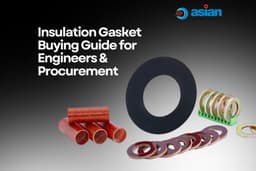



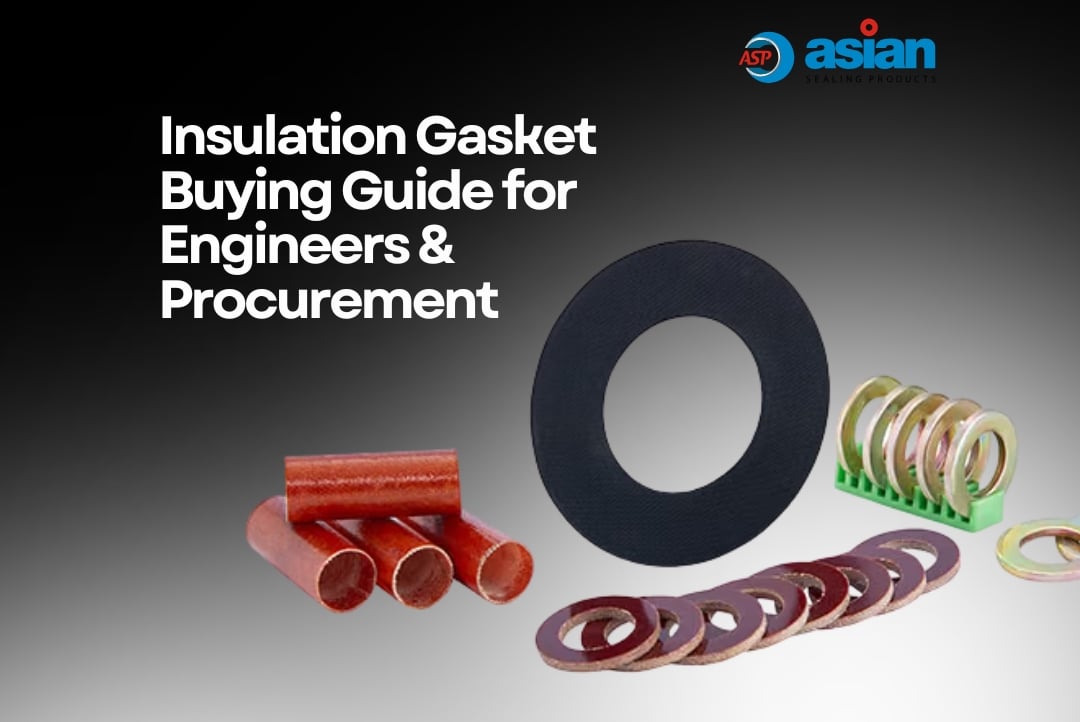
Selecting the right insulation gasket is an important decision for engineers, procurement teams, and maintenance professionals working with industrial piping and flanged connections. The correct gasket must do more than provide a reliable seal. It should also provide electrical isolation between flange components, help control galvanic corrosion, and remain suitable for the pressure, temperature, and media conditions of the application.
An insulation gasket, also known as a flange insulation gasket or isolation gasket, is commonly used in pipelines, oil and gas systems, petrochemical plants, chemical processing facilities, power plants, and other industrial applications where electrical isolation is required.
What is an Insulation Gasket ?
An insulation gasket is a sealing component installed between two flanges to prevent direct electrical contact while maintaining a leak-resistant joint. When dissimilar metals are connected in the presence of moisture or an electrolyte, galvanic corrosion can occur. Electrical isolation helps interrupt this unwanted current path and can support corrosion-control and cathodic-protection systems.
For engineers, the selection process therefore involves two requirements: sealing performance and electrical insulation. A gasket that seals effectively but does not provide adequate isolation may not meet the needs of the overall piping system.
Why Is Insulation Gasket Selection Important?
A properly selected insulation gasket can help:
- Reduce electrical continuity between connected flanges
- Minimize galvanic corrosion between dissimilar metals
- Support cathodic protection systems
- Maintain reliable flange sealing
- Improve pipeline and piping-system integrity
- Reduce maintenance and replacement requirements
The gasket should be selected according to the actual operating conditions rather than simply choosing a standard size. Pressure, temperature, fluid characteristics, flange configuration, and electrical-isolation requirements all influence the final specification.
Key Factors to Consider When Buying an Insulation Gasket
1. Flange Type and Standard
The first step is to identify the flange configuration. Insulation gasket kits are available for different flange arrangements, including raised face (RF), full face (FF), and ring-type joint (RTJ) applications. Type E, Type F, and Type D configurations are commonly used for these different flange designs.
Engineers should verify:
- Flange standard
- Nominal pipe size
- Pressure class
- Flange facing
- Bolt-hole pattern
- Inside and outside diameter
- Required gasket thickness
Compatibility with standards such as ASME B16.5 and applicable project specifications should also be confirmed before procurement.
2. Operating Pressure
Pressure is one of the most important factors when specifying a gasket. The gasket must withstand the mechanical loading created by the flange assembly without excessive deformation, extrusion, or loss of sealing capability.
Higher-pressure applications may require stronger insulating materials or specially engineered gasket constructions. Procurement teams should provide the supplier with the complete pressure class rather than ordering only by nominal pipe size.
3. Operating Temperature
Temperature can significantly affect gasket performance and insulation properties. Materials such as phenolic, G10, G11, PTFE, and other engineered insulating materials have different temperature capabilities.
When requesting a quotation, specify both the normal operating temperature and maximum temperature. Temperature cycling should also be considered for applications where the pipeline repeatedly heats and cools.
4. Process Media and Chemical Compatibility
The process fluid can affect the long-term performance of the gasket material. Chemicals, hydrocarbons, water, acids, solvents, and other aggressive media may require specific material selections.
PTFE, for example, is known for strong chemical resistance, while glass-reinforced epoxy materials such as G10 and G11 can provide a combination of mechanical strength and electrical insulation.
The material should therefore be selected based on the actual media rather than choosing solely according to price.
5. Electrical Isolation Requirements
Electrical isolation is the defining function of an insulation gasket. The gasket itself is only one part of a complete flange isolation system. A typical insulation kit can include an insulating gasket, bolt sleeves, insulating washers, and metal backup washers.
For cathodic-protection applications, engineers should pay particular attention to dielectric strength, moisture absorption, and the ability of the complete assembly to maintain electrical separation.
6. Select the Correct Gasket Type
Different flange configurations require different gasket designs.
Type E is a full-face configuration that covers the complete flange face and bolt-hole area. It can provide extensive isolation coverage.
Type F is designed for raised-face flanges and fits within the flange’s raised-face area.
Type D is designed for ring-type joint flange applications and must match the specified RTJ geometry.
Choosing the wrong configuration can affect both sealing and electrical isolation, so the flange drawing or specification should always be checked before ordering.
What Should Procurement Teams Ask the Supplier?
Before placing an order, procurement teams should provide sufficient technical information to avoid incorrect or incomplete deliveries. A typical inquiry should include:
- Flange size and standard
- Pressure class
- Flange facing type
- Gasket type
- Required gasket material
- Operating and maximum temperature
- Process media
- Required electrical-isolation performance
- Quantity
- Applicable project or industry standards
- Inspection and documentation requirements
For critical applications, it is also useful to confirm material certificates, dimensional inspection, traceability, and any project-specific testing requirements.
Insulation Gasket Kit vs. Standard Gasket
A standard gasket primarily focuses on creating a leak-resistant seal between mating surfaces. An insulation gasket system has the additional responsibility of electrically isolating the flange connection.
This distinction is particularly important in pipelines where corrosion control and cathodic protection are part of the overall design. Using the correct gasket together with compatible sleeves and washers helps create a complete isolation system rather than relying on the gasket alone.
Final Checklist Before Ordering
Before approving an insulation gasket purchase, engineers and procurement professionals should verify five essentials:
- Correct flange dimensions and standard
- Correct gasket type and configuration
- Suitable material for pressure, temperature, and media
- Adequate electrical isolation characteristics
- Complete kit components and required documentation
Taking these points into account can reduce installation problems and help ensure dependable flange performance throughout the service life of the pipeline.
Conclusion
Choosing an insulation gasket should be treated as an engineering specification rather than a simple gasket purchase. The right combination of flange type, material, pressure rating, temperature capability, chemical compatibility, and electrical isolation is essential for reliable performance.
For engineers and procurement teams looking for application-specific solutions, Asian Sealing Products provides insulation gasket and flange isolation kit options designed for industrial piping, pipeline, oil and gas, petrochemical, and other demanding applications.