

In modern industrial systems, rubber gaskets play a vital role in maintaining leak-proof sealing performance across pipelines, machinery, equipment, and processing systems. Though often overlooked, these sealing components are essential for preventing fluid leakage, maintaining internal pressure, reducing vibration, and protecting equipment from contamination and damage.
From automotive engines and chemical processing plants to HVAC systems and water treatment facilities, rubber gaskets are widely used because of their flexibility, durability, chemical resistance, and cost-effectiveness. Selecting the correct gasket material and design directly impacts equipment reliability, operational safety, and maintenance costs.
This comprehensive rubber gasket guide explains gasket materials, gasket types, temperature and pressure considerations, industrial applications, installation practices, maintenance tips, and selection criteria to help industries choose the right sealing solution.
What is a Rubber Gasket?
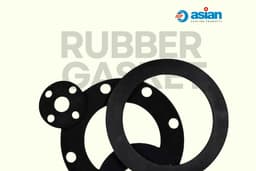
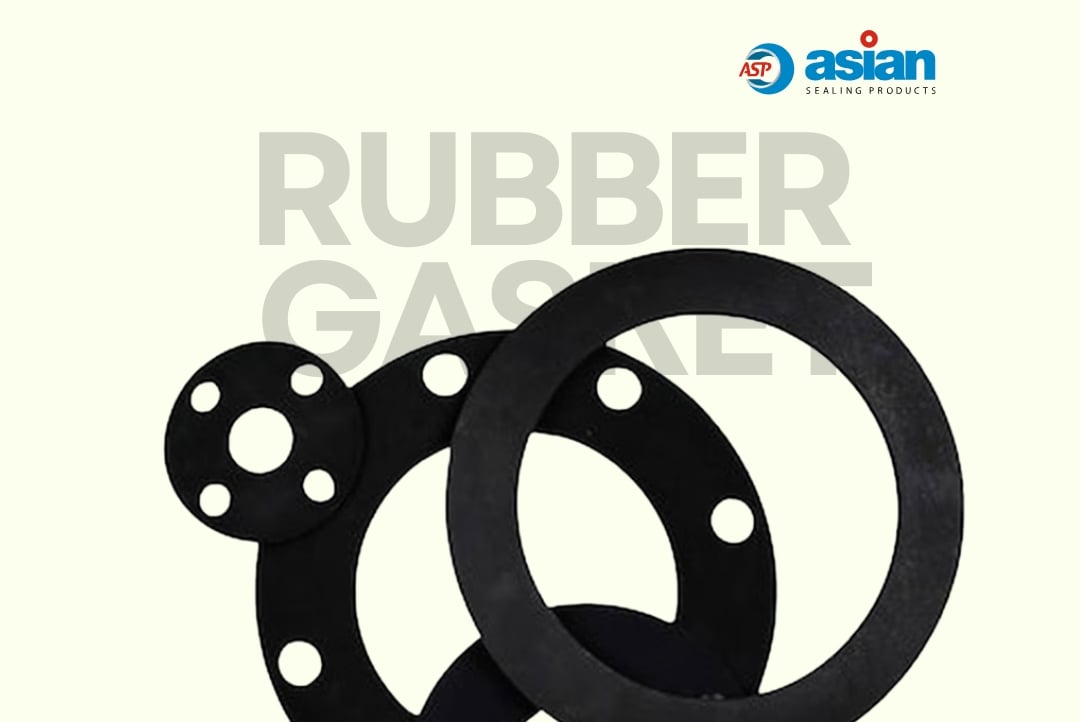
A rubber gasket is a mechanical sealing component installed between two mating surfaces to prevent leakage of liquids, gases, oils, chemicals, steam, or contaminants. When compressed between flanges, covers, housings, or machine components, the gasket fills surface irregularities and creates a secure, leak-resistant seal.
Rubber gaskets are commonly used in static sealing applications where pressure, temperature fluctuations, vibration, or environmental exposure could otherwise compromise system performance.
Why Rubber is Widely Used for Gasket Sealing Applications
Rubber materials offer a unique combination of flexibility, resilience, and chemical resistance, making them ideal for industrial sealing applications.
- Excellent Leak Prevention
Rubber gaskets effectively prevent leakage of fluids and gases, ensuring operational efficiency and environmental safety.
- Superior Flexibility & Compression
Rubber easily conforms to uneven or rough surfaces, helping create tight seals even under varying pressure conditions.
- Vibration & Noise Reduction
The elastic nature of rubber helps absorb vibration, reduce mechanical stress, and minimize operational noise.
- Resistance to Chemicals & Weather
Many rubber compounds resist oils, chemicals, ozone, UV exposure, steam, and moisture.
- Thermal Stability
Certain rubber materials can withstand extremely low and high temperatures without losing sealing capability.
- Corrosion Protection
Rubber gaskets help isolate dissimilar metals and reduce the risk of galvanic corrosion.
- Cost-Effective Sealing Solution
Compared to metal sealing systems, rubber gaskets are economical, easy to manufacture, and simple to install.
Rubber Gasket Materials
The performance of a rubber gasket is intrinsically linked to the material it’s made from. The choice of material depends heavily on the specific application’s environmental conditions, fluid compatibility and required mechanical properties. Here’s a detailed look at common rubber gasket materials:
Natural Rubber (NR) / Polyisoprene
- Characteristics: Excellent elasticity, high tensile strength, good abrasion resistance and tear resistance.
- Temperature Range: Generally −50∘C to 80∘C (−58∘F to 176∘F).
- Pressure Suitability: Typically for low to moderate pressure applications.
- Compatibility: Good with water, alcohols and some ketones. Poor with oils, fuels and strong acids/bases.
- Uses: Water seals, vibration mounts, general-purpose sealing.
Nitrile Rubber (NBR) / Buna-N
- Characteristics: Excellent resistance to petroleum-based oils and fuels, good abrasion resistance and good compression set.
- Temperature Range: Approximately −40∘C to 105∘C (−40∘F to 221°F), with some specialty grades up to 120°C (248°F).
- Pressure Suitability: Good for a wide range of pressures, depending on durometer and design.
- Compatibility: Widely used with hydraulic fluids, oils, greases, and water.
- Uses: Fuel hoses, hydraulic seals, automotive gaskets, and oil seals.
EPDM (Ethylene Propylene Diene Monomer)
- Characteristics: Excellent resistance to ozone, UV radiation, weathering, steam, and some chemicals. Good heat and cold resistance.
- Temperature Range: Typically −50°C to 150°C (−58°F to 302°F).
- Pressure Suitability: Suitable for moderate to high pressures, particularly in outdoor and high-temperature water applications.
- Compatibility: Good with water, steam, alcohols, ketones, and some acids. Not recommended for petroleum products.
- Uses: Outdoor electrical enclosures, automotive weather stripping, water and steam systems, brake fluid seals.
Silicone Rubber (VMQ / PVMQ)
- Characteristics: Exceptional temperature range, excellent flexibility, good resistance to ozone and UV, physiologically inert.
- Temperature Range: Very wide, typically −60∘C to 230∘C (−76∘F to 446∘F), with specialty grades reaching higher or lower.
- Pressure Suitability: Generally for low to moderate pressure applications due to lower tensile strength.
- Compatibility: Good with hot and cold water, some chemicals, and dry heat. Poor with fuels, oils, and strong acids/bases.
- Uses: Medical devices, food and beverage processing, high-temperature seals, and electrical insulation.
Viton® (FKM / Fluoroelastomer)
- Characteristics: Outstanding resistance to high temperatures, aggressive chemicals, fuels, oils, and solvents.
- Temperature Range: Approximately −20°C to 200∘C (−4°F to 392°F), with intermittent exposure up to 250°C (482°F).
- Pressure Suitability: Excellent for high-pressure, high-temperature applications.
- Compatibility: Widely used in environments with hydrocarbons, strong acids, and bases.
- Uses: Chemical processing, aerospace, automotive fuel systems, oil and gas.
Neoprene (CR / Polychloroprene)
- Characteristics: Good balance of properties, including resistance to oils, chemicals, ozone, and weathering. Good flame resistance.
- Temperature Range: Typically −40∘C to 100∘C (−40∘F to 212∘F).
- Pressure Suitability: Moderate pressure applications.
- Compatibility: Good with refrigerants, moderate chemicals, and petroleum-based greases.
- Uses: Industrial hoses, automotive belts, electrical insulation, weather stripping.
Butyl Rubber (IIR)
- Characteristics: Excellent impermeability to gases, good resistance to ozone, weathering, and heat. Good electrical insulation.
- Temperature Range: Around −40°C to 120°C (−40°F to 248°F).
- Pressure Suitability: Good for vacuum and low-pressure gas applications.
- Compatibility: Excellent with polar fluids, steam, and some chemicals.
- Uses: Inner tubes, vacuum seals, pharmaceutical stoppers, high-voltage insulation.
Material Properties (Hardness, Temp Range, Use)
| Material | Abbrev. | Temp. range (°C) | Hardness (Shore A) | Tensile str. (MPa) | Typical use |
|---|---|---|---|---|---|
| Nitrile (Buna-N) | NBR | -40 to +120 | 40–90 | 7–24 | Oil seals, automotive |
| EPDM | EPDM | -50 to +150 | 40–90 | 7–21 | Outdoor, steam, water |
| Silicone | VMQ | -60 to +200 | 20–80 | 4–12 | Food, medical, high temp |
| Fluorosilicone | FVMQ | -60 to +175 | 40–80 | 5–10 | Aerospace fuel systems |
| Viton® (FKM) | FKM | -20 to +200 | 60–90 | 9–16 | Chemical processing |
| Neoprene | CR | -40 to +120 | 40–90 | 10–21 | HVAC, marine, outdoor |
| Natural rubber | NR | -55 to +80 | 30–80 | 14–28 | Shock/vibration, low-temp |
| Butyl | IIR | -50 to +120 | 40–80 | 10–21 | Gas impermeability, steam |
| SBR | SBR | -50 to +100 | 40–80 | 7–25 | Brake systems, general |
| Polyurethane | PU | -30 to +90 | 40–98 | 21–55 | High-wear dynamic seals |
| PTFE (filled) | PTFE | -200 to +260 | 55–65 | 14–35 | Chemical, food, pharma |
| Chloroprene | CR | -40 to +120 | 45–75 | 10–20 | General industrial |
Types of Rubber Gaskets
Rubber gaskets come in various forms, each designed for specific sealing challenges:
- Raised Face Gaskets (Flat Ring Type): The most common type, typically die-cut or knife-cut from a sheet of rubber. Used in static applications where two flat surfaces are joined.
- Full Face Gaskets (Flat Face Type)
Cover the entire flange face, including bolt holes. Ideal for larger flanges and high-pressure environments.
- O-Rings: Toroidal (donut-shaped) rings designed to be compressed in a groove, creating a seal. Highly effective for both static and dynamic applications.
- Custom Molded Gaskets: Designed and manufactured to precise specifications for unique geometries and complex sealing requirements.
- Extruded Gaskets: Formed by forcing rubber through a die, creating continuous profiles that can be cut to length. Often used for long seals or weather stripping.
- Spiral Wound Gaskets (with rubber fillers): A combination of metal windings and a soft filler material (often rubber or graphite). Used in high-temperature and high-pressure applications.
- Rubber Coated Metal Gaskets: A metal core coated with rubber, offering the strength of metal with the sealing properties of rubber.
- Inflatable Gaskets: Designed to be inflated with air or fluid, creating a tight seal against irregular surfaces.
Benefits of Using Rubber Gaskets
The widespread adoption of rubber gaskets is a testament to their numerous advantages:
- Exceptional Sealing Performance: Their inherent elasticity allows them to conform to irregularities and create a tight, reliable seal.
- Corrosion Resistance: Many rubber materials are highly resistant to various chemicals, preventing corrosion of mating surfaces.
- Elasticity: Conforms easily to uneven surfaces, ensuring gap-free sealing.
- Thermal Tolerance: Operates effectively from -60°C to over 200°C (depending on type).
- Cost-Effectiveness: Compared to more complex sealing mechanisms, rubber gaskets offer an economical solution.
- Ease of Installation: Generally straightforward to install, reducing labor time and costs.
- Versatility: Available in a vast array of materials, types, and sizes to suit almost any application.
- Longevity: When correctly selected and installed, rubber gaskets can provide long-lasting, reliable performance.
- Reduced Maintenance: Reliable seals minimize the need for frequent repairs and downtime.
Rubber Gaskets Uses Across Industries
Rubber gaskets are indispensable across a multitude of sectors:
- Automotive Industry: Engine gaskets, oil pan gaskets, valve cover gaskets, fuel system seals, exhaust manifold gaskets, weather stripping.
- Oil & Gas: Pipeline flanges, pump seals, valve seals, wellhead equipment, downhole tools.
- Chemical Processing: Reactor seals, pump diaphragms, valve packing, pipe flanges, acid-resistant seals.
- Water & Wastewater Treatment: Pipe joints, pump seals, valve seals, tank seals, filtration systems.
- HVAC (Heating, Ventilation, and Air Conditioning): Duct seals, fan gaskets, air handling unit seals, chiller seals.
- Food & Beverage: Sanitary seals, pump gaskets, valve diaphragms, filling machine seals (often requiring FDA-approved materials).
- Pharmaceutical: Sterile seals, processing equipment gaskets, cleanroom applications.
- Aerospace: Fuel line seals, hydraulic seals, environmental control system gaskets, window seals.
- Marine: Watertight seals, engine gaskets, propeller shaft seals, bilge pump gaskets.
- Electronics: Enclosure seals, vibration damping for sensitive components, cable glands.
- Manufacturing: Machine tool seals, conveyor belts, assembly line equipment.
Chemical Resistance of Rubber Materials
| Chemical / fluid | NBR | EPDM | Viton | Silicone | Neoprene | Butyl | SBR | NR |
|---|---|---|---|---|---|---|---|---|
| Petroleum / crude oil | Excellent | Poor | Excellent | Fair | Fair | Poor | Poor | Poor |
| Hydraulic oil (mineral) | Excellent | Poor | Excellent | Good | Fair | Poor | Poor | Poor |
| Diesel / fuel oil | Excellent | Poor | Excellent | Fair | Fair | Poor | Poor | Poor |
| Gasoline / petrol | Excellent | Poor | Excellent | Poor | Fair | Poor | Poor | Poor |
| Engine oil (SAE) | Excellent | Poor | Excellent | Good | Good | Poor | Poor | Poor |
| Water (fresh) | Good | Excellent | Good | Good | Good | Excellent | Good | Good |
| Seawater | Good | Excellent | Good | Good | Good | Excellent | Fair | Good |
| Steam (100–150°C) | Poor | Excellent | Good | Good | Poor | Good | Poor | Poor |
| Hot water (>80°C) | Fair | Excellent | Good | Good | Fair | Good | Fair | Fair |
| Sulphuric acid (dil.) | Poor | Good | Excellent | Fair | Fair | Good | Fair | Poor |
| Hydrochloric acid (dil.) | Poor | Good | Excellent | Fair | Fair | Good | Fair | Poor |
| Nitric acid (dil.) | Poor | Fair | Good | Poor | Poor | Fair | Poor | Poor |
| Sodium hydroxide (NaOH) | Good | Excellent | Good | Good | Good | Excellent | Good | Good |
| Ammonia | Fair | Excellent | Poor | Fair | Fair | Good | Fair | Good |
| Acetone | Poor | Good | Poor | Fair | Poor | Excellent | Poor | Poor |
| MEK / ketones | Poor | Good | Poor | Fair | Poor | Excellent | Poor | Poor |
| Ethanol | Fair | Good | Good | Good | Fair | Good | Fair | Good |
| Methanol | Fair | Good | Good | Good | Fair | Good | Fair | Good |
| Chlorine (dry) | Poor | Good | Excellent | Fair | Fair | Fair | Poor | Poor |
| Ozone / UV exposure | Poor | Excellent | Excellent | Excellent | Good | Good | Poor | Poor |
| Refrigerants (R134a) | Good | Poor | Excellent | Fair | Good | Poor | Poor | Poor |
| Phosphate ester fluids | Poor | Excellent | Excellent | Fair | Fair | Good | Fair | Fair |
| Compressed air | Good | Excellent | Excellent | Excellent | Good | Excellent | Good | Good |
| Natural gas | Excellent | Poor | Excellent | Fair | Fair | Poor | Fair | Poor |
| LPG / propane | Excellent | Poor | Excellent | Poor | Fair | Poor | Poor | Poor |
Ratings based on ambient/standard operating conditions. Elevated temperature or concentration may downgrade compatibility. Always verify with full soak testing for critical applications.
Rubber Gasket Installation Guidelines
Proper gasket installation is essential to achieve reliable sealing performance and extend gasket service life. Even a high-quality rubber gasket can fail prematurely if installed incorrectly. Following the correct installation procedures helps prevent leakage, uneven compression, equipment damage, and costly downtime.
Surface Preparation
Before installation, ensure that all mating surfaces are clean, smooth, dry, and free from dirt, oil, rust, old gasket residue, scratches, or corrosion. Surface imperfections can affect gasket seating and compromise sealing efficiency.
Verify Gasket Selection
Always confirm that the selected gasket material, thickness, size, and design are suitable for the application’s operating temperature, pressure conditions, and chemical exposure. Using an incompatible gasket may result in swelling, cracking, or seal failure.
Ensure Proper Alignment
Carefully position the gasket between the flange or sealing surfaces to ensure accurate alignment with bolt holes and sealing areas. Improper alignment can create uneven pressure distribution and increase the risk of leakage.
Apply Uniform Compression
Bolts should be tightened gradually and evenly using a crisscross or star tightening pattern. Uniform compression ensures proper gasket seating and prevents localized stress damage. Over-tightening may crush the gasket, while under-tightening can lead to leakage.
Follow Recommended Torque Values
Use the manufacturer’s specified torque settings during installation. A calibrated torque wrench is recommended to achieve consistent bolt loading and optimal sealing performance.
Avoid Unnecessary Gasket Compounds
In most applications, rubber gaskets should be installed dry unless specifically recommended by the manufacturer. Excessive use of sealants or gasket dressings may interfere with gasket compression or chemically react with the rubber material.
Conduct Final Inspection
After installation and tightening, inspect the gasket assembly for signs of uneven compression, pinching, extrusion, or misalignment. A proper inspection helps identify installation issues before the system becomes operational.
Re-Torque if Required
Certain applications may require bolt re-torquing after initial operation due to gasket relaxation or thermal expansion. Always follow equipment or gasket manufacturer recommendations for re-torque procedures.
Rubber Gasket Selection Criteria
Selecting the correct rubber gasket is essential for maintaining sealing reliability, operational safety, and long-term equipment performance. Proper gasket selection depends on several important operating and environmental factors.
1. Operating Environment
The gasket must withstand the specific environmental conditions of the application.
Temperature Range
Evaluate whether the gasket will operate under extreme heat, cold, or fluctuating temperatures. Selecting the correct temperature-resistant material helps prevent hardening, cracking, or deformation.
Pressure Conditions
Consider whether the system operates under low pressure, high pressure, vacuum conditions, or pressure cycling. Higher pressure applications require stronger gasket materials with excellent compression resistance.
Media Exposure
Determine if the gasket will come into contact with:
- Oils
- Fuels
- Steam
- Chemicals
- Acids
- Solvents
- UV exposure
- Moisture or weathering conditions
2. Material Compatibility
Rubber gasket material must be chemically compatible with both the process media and the flange materials.
Fluid & Gas Compatibility
Ensure the gasket material resists chemical attack, swelling, degradation, or contamination caused by process fluids or gases.
Flange Material Compatibility
Check compatibility with metal, plastic, or coated flange surfaces to avoid chemical reactions, corrosion, or sealing issues.
3. Mechanical Properties
Mechanical characteristics directly affect gasket durability and sealing efficiency.
Compression Set
A low compression set helps the gasket retain its original shape after compression, ensuring long-term sealing performance.
Hardness (Shore A)
Gasket hardness influences flexibility, conformability, and pressure resistance.
Tensile Strength & Elongation
Strong tensile properties improve resistance to tearing, stretching, and mechanical stress during operation.
4. Gasket Design & Fit
Proper gasket dimensions and design are critical for effective sealing.
Thickness & Shape
Select the correct gasket thickness and profile based on flange type and sealing requirements.
Flange Size & Bolt Alignment
Ensure accurate matching of:
- Bolt hole placement
- Inner and outer diameters
- Sealing surface area
- Gasket width
A properly fitted gasket improves sealing reliability and reduces the chances of leakage or premature failure.
Conclusion
Rubber gaskets are essential sealing components that support the safe and efficient operation of industrial equipment across countless industries. Their ability to provide reliable leak prevention, pressure retention, vibration control, and chemical resistance makes them indispensable in modern engineering systems.
Understanding gasket materials, operating conditions, pressure requirements, and installation practices is crucial for selecting the right gasket for any application. Whether used in automotive systems, chemical plants, pipelines, HVAC units, or food processing equipment, properly selected rubber gaskets help improve equipment reliability, reduce maintenance costs, and extend operational lifespan.
By investing in high-quality rubber gaskets and following proper installation and maintenance practices, industries can ensure long-term sealing performance, operational safety, and improved system efficiency.
FAQs
A rubber gasket is used to create a leak-proof seal between two mating surfaces. It helps prevent leakage of liquids, gases, oils, steam, or chemicals while maintaining pressure, reducing vibration, and protecting industrial equipment from contamination and operational damage.
Nitrile Rubber (NBR) and Viton® (FKM) are commonly used for oil and fuel applications because of their excellent resistance to petroleum products, hydraulic fluids, diesel, gasoline, and lubricants. These materials provide reliable sealing performance in automotive and industrial environments.
Rubber gaskets are widely used in industries such as automotive, oil & gas, chemical processing, HVAC, marine, pharmaceuticals, water treatment, food processing, and manufacturing. They are essential for sealing pipelines, valves, pumps, machinery, engines, and processing equipment.
Choosing the right gasket depends on operating temperature, pressure, chemical exposure, fluid compatibility, environmental conditions, and flange design. Selecting the correct material ensures long-lasting sealing performance, improved equipment safety, and reduced maintenance costs in industrial systems.
Rubber gaskets offer better flexibility, easier installation, vibration absorption, corrosion resistance, and cost-effectiveness compared to many metal gaskets. They can easily conform to uneven surfaces and provide efficient sealing in both low and moderate pressure applications.
Yes, certain rubber gasket materials such as Silicone, EPDM, and Viton® are specifically designed for high-temperature applications. Depending on the material, rubber gaskets can operate effectively in temperatures ranging from -60°C to over 200°C without losing sealing efficiency.
Rubber gaskets may fail due to incorrect material selection, over-tightening, uneven compression, chemical incompatibility, improper installation, excessive pressure, or exposure to extreme temperatures. Regular inspection and proper installation practices help improve gasket lifespan and sealing reliability.
EPDM gaskets are ideal for water, steam, UV exposure, and outdoor applications, while Nitrile (NBR) gaskets are better suited for oils, fuels, and petroleum-based fluids. The selection depends on the application’s chemical exposure and environmental conditions.
Yes, rubber gaskets are widely used in chemical processing plants. Materials like Viton®, EPDM, and PTFE-filled gaskets provide excellent resistance against aggressive chemicals, acids, solvents, and high temperatures, ensuring safe and reliable sealing performance in harsh environments.
Proper installation is critical for achieving leak-free sealing performance. Clean surfaces, correct alignment, uniform bolt tightening, and recommended torque values help prevent leakage, uneven compression, gasket damage, and premature equipment failure, ultimately improving overall operational efficiency.