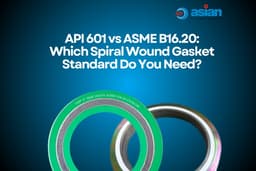



In industrial sealing solutions, spiral wound gaskets stand out as versatile and reliable components, offering robust performance in diverse applications. Spiral wound gaskets come in various types, each tailored to meet specific sealing requirements in diverse industrial applications. The SIO gasket, featuring inner and outer rings crafted from carbon and stainless steel materials, provides robust sealing with enhanced structural support. In contrast, the SIOH variant boasts an outer ring with bolt holes and inner rings, facilitating secure bolting and alignment during installation. The SIR gasket, with inner rings typically made of stainless steel, focuses on structural integrity and shape retention.
Additionally, the SWR gasket lacks a centering ring, offering a straightforward yet effective sealing solution. The SCD gasket is equipped with a centering device for applications demanding precise alignment. The SWG gasket stands out with graphite filters, ideal for environments requiring resistance to high temperatures and chemicals. The SWD gasket, a double-layered configuration, enhances thickness for improved sealing performance. Lastly, the SOR gasket features a centering ring, ensuring proper alignment during installation and making it suitable for applications requiring stability and precision. Each type caters to specific needs, providing a comprehensive range of solutions in industrial sealing.
Among the various configurations available, those with centering rings and inner rings are particularly noteworthy. This complete guide aims to shed light on the intricacies of spiral wound gaskets with centering rings (SOR) and spiral wound gaskets with inner rings (SIR), exploring their individual characteristics, applications, and the key differences that set them apart.
Understanding Spiral Wound Gaskets
Spiral Wound Gaskets: An Overview
Spiral wound gaskets represent sealing devices designed to prevent leaks in flanged connections subjected to fluctuating temperatures and pressures. Their construction involves a combination of metallic winding and filler material, creating a resilient structure capable of withstanding challenging operating conditions. These gaskets find applications across industries such as petrochemicals, oil and gas, pharmaceuticals, and power generation.
Key Components of Spiral Wound Gaskets
1. Metallic Winding:
The metallic winding, typically made of stainless steel or other alloys, provides strength and resilience to the gasket. This component ensures that the gasket maintains its structural integrity under various environmental stresses.
2. Filler Material:
The filler material, often graphite or PTFE (polytetrafluoroethylene), contributes to the gasket’s sealing properties. The choice of filler material depends on the application’s specific requirements, such as temperature resistance or chemical compatibility.
3. Outer and Inner Rings:
Many spiral wound gaskets incorporate outer and inner rings for support and stability. The characteristics of these rings play a crucial role in defining the gasket’s performance, especially in the case of SOR and SIR configurations.
Spiral Wound Gaskets with Centering Rings (SOR)
Spiral wound metallic gaskets with centering rings are designed to address the challenges of flange misalignment during installation. The centering ring, typically made of a durable material like stainless steel, is positioned on the inner diameter of the gasket, serving as a guide during assembly. This feature helps ensure proper alignment between flanges, preventing issues related to misalignment and facilitating a secure and effective seal.
Characteristics of SOR Gaskets
1. Centering Ring:
The defining feature of spiral wound gaskets with centering rings is the inclusion of a centering ring. This ring, typically made of the same material as the metallic winding, serves to center the gasket within the flange, ensuring proper alignment during installation.
2. Improved Alignment:
The presence of the centering ring significantly aids in the alignment of the gasket during installation. This becomes crucial for achieving a secure and uniform seal between flanges, reducing the likelihood of misalignment issues.
3. Material Variations:
Centering rings can be crafted from various stainless steel materials to suit specific application requirements.
4. Applications:
SOR gaskets are often preferred in applications where precise alignment is essential for effective sealing. Their use is prevalent in industries where flanged connections, such as oil refineries and chemical processing plants, are subjected to high pressure.
Spiral Wound Gaskets with Inner Rings (SIR)
Spiral wound metallic gaskets with inner rings incorporate a ring on the inner diameter of the gasket, providing additional structural support. This inner ring, often made from materials like stainless steel, enhances the gasket’s stability and resilience, making it suitable for applications with varying temperature and pressure conditions.
Characteristics of SIR Gaskets
1. Inner Ring:
Unlike SOR gaskets, spiral wound gaskets with inner rings feature a ring on the inner diameter. This inner ring, typically made of stainless steel, enhances the gasket’s resilience and provides additional structural support.
2. Uniform Stress Distribution:
The inclusion of an inner ring helps distribute stress more uniformly across the gasket. This can be particularly advantageous in applications where maintaining the gasket’s shape under varying conditions is critical.
3. Stability and Support:
The inner ring provides added support, particularly in applications where the gasket may experience flange irregularities or uneven pressures.
4. Material Options:
Inner rings can be manufactured from different materials based on the application’s specific requirements.
5. Applications:
SIR gaskets are suitable for applications requiring additional structural support and resilience. Industries with processes involving thermal cycling or equipment subjected to mechanical vibrations often find these gaskets beneficial.
Key Differences Between SOR and SIR Gaskets
Alignment Mechanism:
– SOR Gaskets: The centering ring in SOR gaskets facilitates precise alignment during installation, minimizing the risk of misalignment issues.
– SIR Gaskets: While SIR gaskets lack a centering ring, the inner ring contributes to uniform stress distribution, which can be advantageous in applications with specific structural requirements.
Material and Construction:
– SOR Gaskets: The centering ring in SOR gaskets is typically crafted from the same material as the metallic winding, ensuring compatibility and coherence in the gasket’s overall construction.
– SIR Gaskets: The inner ring in SIR gaskets is often made of stainless steel, providing enhanced strength and support to the gasket.
Applications:
– SOR Gaskets: These gaskets find applications in industries where precise alignment is crucial for effective sealing, such as high-pressure systems in oil refineries and chemical processing plants.
– SIR Gaskets: Suitable for applications requiring additional structural support and resilience, SIR gaskets are often utilized in processes involving thermal cycling or equipment subjected to mechanical vibrations.
Conclusion
In conclusion, spiral wound gaskets with centering rings (SOR) and spiral wound gaskets with inner rings (SIR) represent two distinct configurations tailored to meet specific sealing requirements. While SOR gaskets excel in applications demanding precise alignment, SIR gaskets shine in scenarios where additional structural support and resilience are paramount. Understanding the nuances of these configurations is essential for selecting the right gasket for a given industrial application, ensuring optimal performance and longevity in diverse operating conditions. As industries continue to evolve, the versatility and reliability of spiral wound gaskets with centering rings and inner rings position them as indispensable components in the landscape of modern engineering and manufacturing.